
Digestive Supplements: What Works, What Doesn't, and How to Use Them Right
When you're dealing with bloating, gas, or irregular bowel movements, digestive supplements, oral products designed to support gut function and improve digestion. Also known as gut health aids, they range from probiotics to enzymes and fiber—but most people use them wrong. The market is flooded with claims, but not every pill or powder delivers what it promises. What matters isn't the brand or the price tag—it's whether your body actually needs it, and if the supplement matches your specific issue.
For example, if you feel bloated after eating beans or dairy, you might be low on digestive enzymes, proteins that break down food into absorbable nutrients. Also known as enzyme supplements, they help when your pancreas doesn't produce enough. A study from the Journal of Clinical Gastroenterology found that people with chronic indigestion saw real relief after taking pancreatic enzymes with meals. But if you're not digesting fats or proteins, taking enzymes won't fix a low-fiber diet. That's where fiber supplements, additives that increase stool bulk and regulate bowel movements. Also known as bulk-forming laxatives, they're essential for constipation caused by low intake. Psyllium husk, for instance, works better than many synthetic laxatives—and it’s backed by decades of use.
Then there’s probiotics, live bacteria that support a healthy gut microbiome. Also known as gut flora boosters, they’re often recommended after antibiotics or for IBS. But here’s the catch: not all probiotics are the same. Lactobacillus rhamnosus GG helps with diarrhea, while Bifidobacterium infantis is better for bloating. Taking a random blend won’t help if you’re targeting a specific symptom. And if you’re taking them with hot coffee or without food, you’re just wasting money.
Most people don’t realize that digestive supplements aren’t replacements for diet. If you’re eating processed foods, skipping veggies, or drinking sugary sodas, no pill will fix that. The best results come when supplements fill real gaps—like low fiber intake, enzyme deficiency after surgery, or microbiome disruption after antibiotics. And timing matters. Enzymes need to be taken right before meals. Probiotics often work best on an empty stomach. Fiber needs water—lots of it—or it can make constipation worse.
You’ll find posts here that cut through the noise. One explains why magnesium can interfere with osteoporosis meds—something people don’t realize affects bowel function too. Another breaks down how to store liquid antibiotics properly, because gut health can be ruined by expired or improperly stored meds. There’s even a guide on constipation that shows why most laxatives fail long-term because they ignore root causes like hydration and movement.
What you won’t find here are miracle cures or vague claims. Just clear, practical advice based on what actually works—and what’s just marketing. Whether you’re trying to reduce bloating after meals, fix occasional constipation, or recover from antibiotics, the right supplement can help. But only if you know which one, when to take it, and why.
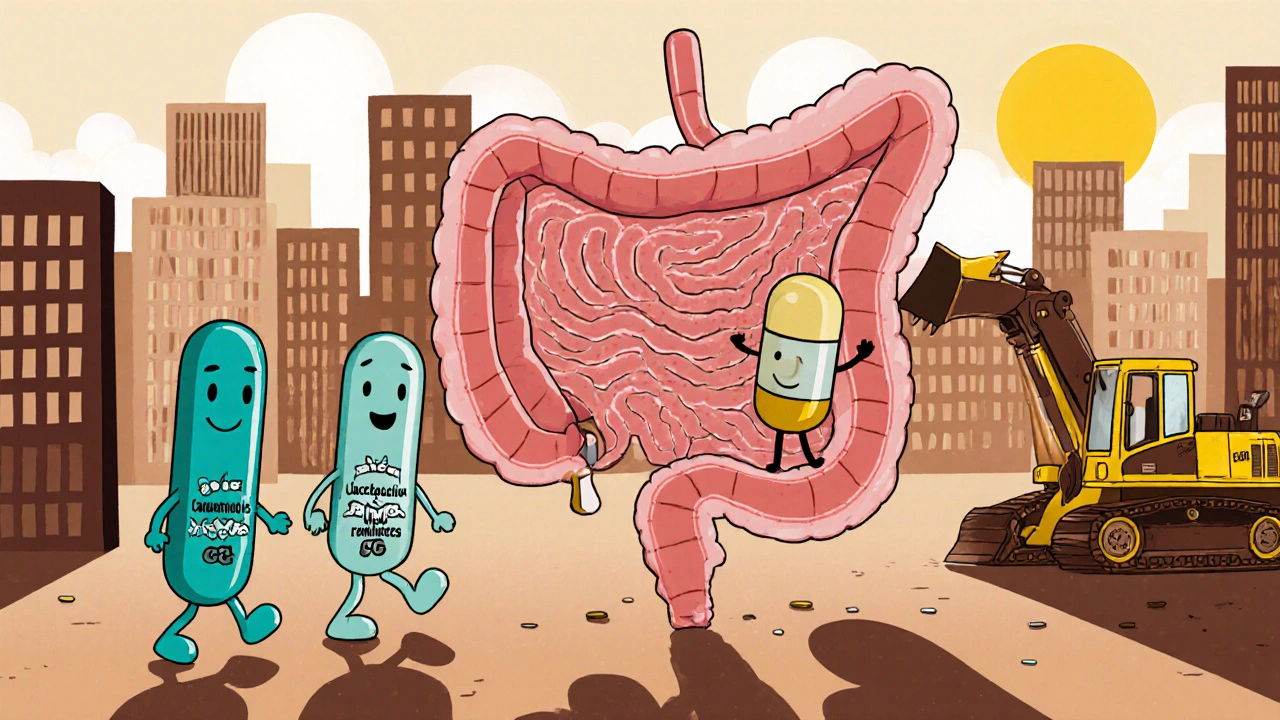
Probiotics and Gut Health: What the Science Says About Digestive Supplements
Probiotics can help with antibiotic-associated diarrhea and infectious diarrhea in children, but not all strains work for every condition. Learn what the science says, which strains matter, and how to choose a reliable supplement.
November 24 2025